
How to Choose a Luxury Silk Scarf: The Complete Buyer's Guide to Silk Quality, Fabric, and Craftsmanship


A luxury silk scarf is more than a fashion accessory — it is a statement of taste, an investment in quality, and a versatile piece that can elevate your wardrobe for years, even decades, if chosen well. But the market is flooded with silk scarves at every price point, and the difference between a genuinely luxurious silk scarf and an average one is not always obvious at first glance. Misleading labels, vague product descriptions, and the inability to touch fabric through a screen make online shopping for silk especially challenging.
So how do you tell the difference? How do you evaluate silk quality before you buy? And what should you actually look for when choosing a silk scarf that justifies a premium price?
This guide breaks down everything that matters — from the type of silk and the grading system, to momme weight, weave types, print methods, hem finishing, and the subtle details that separate a truly luxurious silk scarf from one that merely looks the part. Whether you are buying a silk scarf for yourself, selecting one as a gift, or sourcing silk scarves for a brand or retail business, this article will give you the knowledge to make confident, informed decisions.
Understanding Silk Fiber Types: Why Mulberry Silk Is the Gold Standard for a Premium Scarf
Not all silk is the same. The word "silk" on a label tells you the fiber comes from a silkworm cocoon, but it does not tell you which type of silkworm, what the worm was fed, or how the fiber was processed — all of which dramatically affect the look, feel, and longevity of the finished silk scarf.
Mulberry Silk
Mulberry silk is produced by domesticated silkworms (Bombyx mori) that are raised in controlled environments and fed exclusively on mulberry leaves. This controlled diet produces fibers that are exceptionally uniform in thickness, naturally white (making them ideal for dyeing in any color), and remarkably smooth and lustrous. Mulberry silk accounts for roughly 90% of the world's silk production and is universally considered the highest quality silk for fashion, bedding, and luxury accessories.
When choosing a luxury silk scarf, always look for "100% mulberry silk" on the label. This is the fiber standard used by premium fashion houses and is the foundation of every high-quality silk product. At DreamSilk, all of our custom silk scarves and silk accessories are made exclusively from 100% mulberry silk — because the fiber quality determines everything that follows.
Tussah (Wild) Silk
Tussah silk comes from wild silkworms that feed on oak and juniper leaves. It has a more textured, irregular appearance with a natural tan or golden color. While tussah silk has its own aesthetic charm and is appreciated in certain artisan contexts, it is generally coarser, less lustrous, and less uniform than mulberry silk. It is not the standard for luxury silk scarves.
Blended and Synthetic "Silk"
Be cautious of labels that say "silk blend," "silk-like," "silky," or "satin." These terms often indicate a mix of silk with polyester, rayon, or viscose — or in some cases, no real silk at all. A genuine luxury silk scarf should be 100% pure silk with no synthetic blending. If the label is vague or avoids specifying the exact fiber composition, that is a red flag.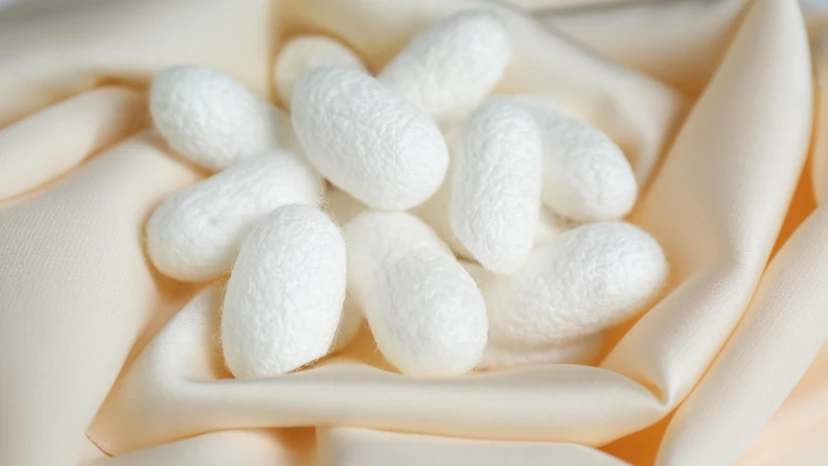
How Silk Grading Works: What 6A Grade Means and Why It Matters for Your Silk Scarf
Raw silk is classified into quality grades based on the regularity, length, strength, elasticity, and cleanliness of the fiber. The grading scale — which follows the Chinese national standard GBT 1797-2008 — ranges from Grade 6A (the highest) down through 5A, 4A, 3A, 2A, A, B, C, D, E, and F (the lowest).
The grade is determined primarily by fiber length and uniformity. A single silk cocoon can yield approximately 800 meters of continuous thread, but the quality varies from the outer layers to the inner core. The longest, most uniform sections of fiber receive the highest grades.
| Silk Grade | Fiber Quality | Typical Use | Impact on Finished Scarf |
|---|---|---|---|
| 6A (Highest) | Longest, finest, most uniform fibers with exceptional luster and strength | Premium luxury scarves, high-end fashion, designer bedding | Ultra-smooth surface, deep color absorption, superior drape, long lifespan |
| 5A | Long fibers with minor irregularities | Quality fashion accessories, mid-to-high-end retail | Smooth surface with very slight texture variation, good color depth |
| 3A – 4A | Shorter fibers, more variation in thickness | Mid-range clothing, basic accessories | Noticeable texture, less refined drape, moderate color vibrancy |
| A – 2A | Short fibers with visible irregularities | Budget accessories, linings, blended fabrics | Rougher surface, duller appearance, more prone to pilling |
| B – F (Lowest) | Shortest, most irregular fibers | Industrial textiles, low-end products | Not suitable for quality scarves or skin-contact accessories |
For a luxury silk scarf, aim for Grade 6A or 5A mulberry silk. The difference is tangible — you can feel it in the smoothness when you run the fabric between your fingers, see it in how evenly and deeply the dyes absorb, and notice it in how the scarf drapes and moves. Grade 6A silk also holds up better over time, resisting pilling and maintaining its luster through years of wear and careful washing.
DreamSilk uses 6A-grade mulberry silk as the standard for all customization projects. When we work with brands developing their own silk scarf lines, we always recommend starting with the highest grade fiber — because it is the single most important quality factor, and it determines the ceiling for every other attribute of the finished product.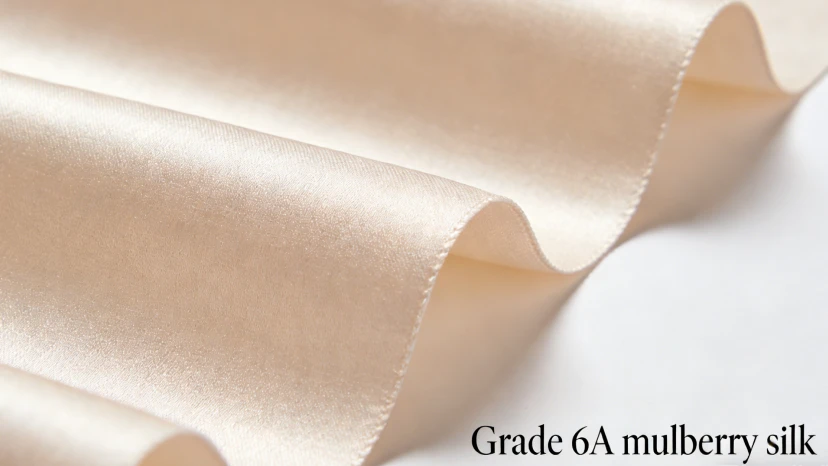
Momme Weight Explained: Choosing the Right Fabric Density for a Silk Scarf
If silk grade tells you about the quality of the fiber, momme weight tells you about the density of the fabric. Momme (pronounced "mummy," abbreviated "mm") is the standard unit for measuring silk fabric weight. Technically, one momme equals the weight in pounds of a piece of silk that is 45 inches wide and 100 yards long. In practical terms, higher momme means more silk fibers are packed into the same area of fabric — resulting in a denser, heavier, more opaque, and more durable material.
The conversion is simple: 1 momme ≈ 4.3 grams per square meter (GSM). So a 16 momme silk scarf weighs approximately 69 GSM, while a 25 momme silk scarf weighs approximately 108 GSM — a significant difference in hand feel, drape, light-blocking ability, and durability.
Momme Ranges for Silk Scarves
Silk scarves typically fall in the 8 to 19 momme range, depending on the intended style and use. Lighter momme creates an airy, translucent drape ideal for warm weather and delicate styling. Heavier momme produces a more substantial, structured feel with richer color depth and greater durability.
| Momme Weight | Fabric Feel | Best Scarf Applications | Notes |
|---|---|---|---|
| 8 – 12 mm | Very lightweight, sheer, ethereal | Silk chiffon scarves, summer wraps, decorative draping | Beautiful movement but very delicate. Less color depth. Best for warm-weather accessories. |
| 12 – 14 mm | Lightweight, smooth, subtle luster | Everyday silk scarves, neck scarves, hair accessories | Good all-around weight for casual and versatile scarves. Balances lightness with durability. |
| 16 – 19 mm | Medium weight, rich drape, deeper color saturation | Premium silk scarves, luxury gift scarves, silk twill squares | The sweet spot for luxury silk scarves. Holds knots well, drapes beautifully, and lasts years with proper care. |
| 19 – 25 mm | Heavier, more structured, opaque | Silk shawls, large wraps, evening stoles | More weight and warmth. Excellent for larger format silk accessories and cooler weather. |
For a luxury silk scarf in the classic square format (70cm to 90cm), 14 to 19 momme silk twill is the most common and most recommended choice. It provides enough weight and structure for versatile tying and styling, while maintaining the fluid, graceful drape that makes silk so desirable. If you are choosing a large silk shawl or a silk evening wrap, 19 to 25 momme offers the substance and warmth those formats require.
When evaluating silk scarves online, always check whether the product description specifies the momme weight. Reputable brands and manufacturers are transparent about this number. If a seller does not list the momme weight, that is often a sign that the fabric is either very low weight or not pure silk.
Silk Weave Types: How Fabric Construction Affects the Look and Feel of Your Scarf
The same mulberry silk fiber can be woven into very different fabrics depending on the weave pattern used. The weave affects the texture, sheen, drape, weight, and even how the silk scarf holds knots and responds to tying. Understanding the main silk weave types helps you choose a scarf that matches your desired aesthetic and functional needs.
Silk Twill
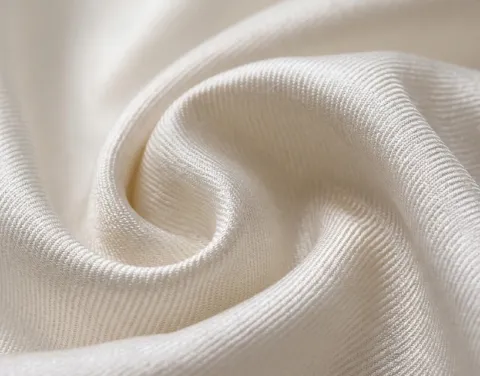
Silk twill is the most popular weave for luxury square silk scarves. It is characterized by a diagonal rib pattern in the fabric structure that gives it a distinctive texture, a subtle matte-to-semi-gloss sheen, and a medium-weight drape with excellent structure. Silk twill holds folds, knots, and tying shapes better than smoother weaves, making it the most versatile choice for scarf styling. The iconic 90cm × 90cm square silk scarves produced by major luxury fashion houses have historically been made from silk twill — typically in the 14 to 16 momme range.
Silk Charmeuse (Satin Weave)
Silk charmeuse uses a satin weave that creates a highly glossy, luminous front surface and a matte back. It has a fluid, liquid-like drape that looks stunning when draped or loosely wrapped. However, charmeuse is more slippery than twill, which means knots may not hold as securely — making it better suited for styles that rely on draping rather than tight knotting. Charmeuse also shows wrinkles and handling marks more readily than twill.
Silk Chiffon
Silk chiffon is an ultra-lightweight, sheer fabric with a soft, slightly rough texture and a beautiful transparency. It is typically woven from very fine twisted yarns at low momme weights (6 to 10mm). Chiffon scarves are elegant and airy — perfect for summer, formal events, and delicate layering — but they are more fragile than twill or charmeuse and require more careful handling.
Silk Habotai (China Silk)
Silk habotai is a simple plain weave with a smooth, even surface and a gentle, natural luster. It is lighter and more affordable than twill, with a soft, pliable hand feel. Habotai is commonly used for lining, lightweight scarves, and printed silk accessories. It is a good entry-level silk for casual scarves but lacks the weight and structural quality of twill for luxury applications.
Silk Crepe de Chine
Silk crepe de chine has a slightly pebbly, textured surface created by using twisted yarns in the weave. This texture gives the fabric a matte finish with subtle depth and a beautiful natural drape that resists wrinkles better than smooth weaves. Crepe de chine works well for both structured and flowing scarf styles and is popular in contemporary fashion designs.
For most buyers seeking a luxury silk scarf that balances beauty, versatility, and durability, silk twill in the 14 to 19 momme range is the optimal choice. It is the industry standard for premium silk square scarves and the weave we most frequently recommend to brands developing their own custom silk scarf collections.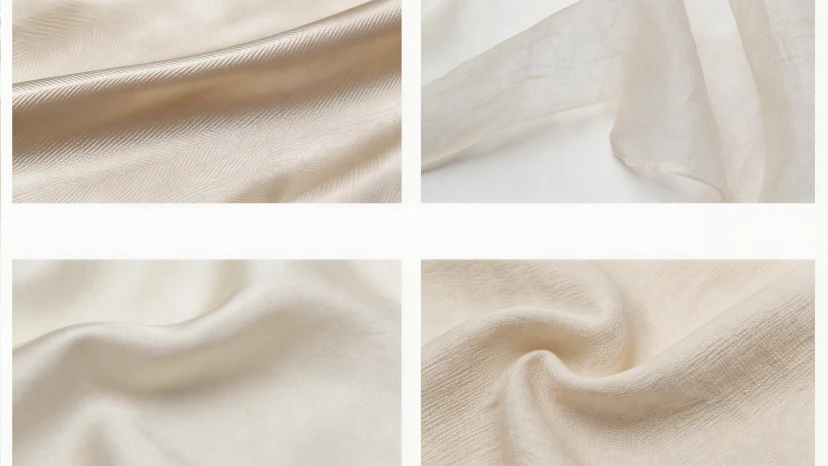
Print Quality and Color: How to Evaluate the Design on a Luxury Silk Scarf
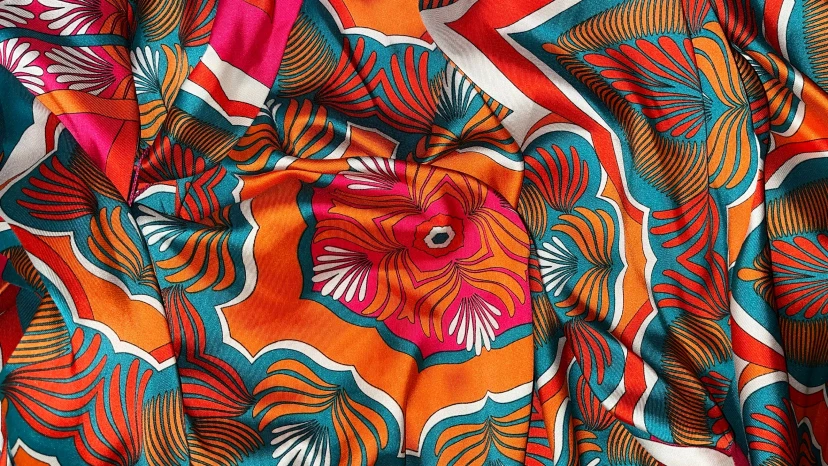
The visual design on a silk scarf is often what draws buyers in — but behind every beautiful print is a technical process that directly affects color vibrancy, detail resolution, longevity, and the overall perceived quality of the scarf. Understanding print methods helps you distinguish between a luxury silk scarf with lasting color and a cheaper product whose design will fade or bleed after a few washes.
Digital Printing
Digital printing (also called inkjet printing) uses high-resolution printers to apply dye directly onto the silk fabric. It excels at reproducing complex, detailed designs with photographic clarity, fine gradients, and an almost unlimited color palette. Modern digital printing technology can achieve exceptional color depth and accuracy on silk, making it the preferred method for custom designs, artistic prints, and small-to-medium production runs. The dyes are typically reactive dyes that bond chemically with the silk fiber, resulting in excellent wash fastness and color retention.
Screen Printing
Screen printing (also called rotary or flat-bed printing) uses individual screens — one for each color in the design — to apply dye to the fabric layer by layer. This traditional method produces rich, saturated colors with exceptional consistency across large production runs. Each additional color requires a separate screen, which means highly detailed, multi-color designs can be more expensive to produce via screen printing than via digital. However, screen printing often achieves a depth and intensity of color that is difficult to replicate digitally, and it remains the preferred method for many heritage luxury brands.
What to Look For
When evaluating the print quality on a silk scarf, look for these indicators of craftsmanship:
- Color vibrancy and depth: Colors should look rich and saturated, not washed out or flat. On high-quality silk, dyes absorb deeply into the fiber, producing colors that appear to glow from within the fabric.
- Detail and sharpness: Fine lines, small text, and intricate patterns should be clean and clearly defined — not blurry, bleeding, or smudged at the edges.
- Color consistency: The same color should look uniform across the entire surface of the scarf. Uneven patches, streaks, or inconsistent saturation indicate poor print calibration.
- Back-side print penetration: On high-quality printed silk, some color should be visible on the reverse side of the fabric. This indicates that the dye has penetrated the fiber properly, which improves wash fastness and color longevity. If the reverse is completely white while the front is boldly colored, the print is likely surface-only and will fade quickly.
- Pantone color matching: For branded or custom-designed silk scarves, reputable manufacturers offer Pantone color matching — ensuring that the colors on the finished product match the exact specifications of the original design. This is standard practice in professional silk scarf production.
Edge Finishing and Hem Quality: The Detail That Separates Luxury from Mass Production
One of the quickest ways to assess the quality of a silk scarf is to look at its edges. The hem finishing is a clear indicator of how much care and craftsmanship went into the production — and it directly affects the scarf's drape, appearance, and durability.
Hand-Rolled Hems
Hand-rolled hems are the hallmark of a true luxury silk scarf. In this technique, the raw edge of the silk fabric is carefully folded and rolled by hand, then secured with tiny, nearly invisible stitches. The result is a soft, rounded edge with a subtle three-dimensional quality that catches the light beautifully and gives the scarf a refined, artisanal character. Hand-rolling is labor-intensive and time-consuming — which is why it is found almost exclusively on premium and luxury silk scarves. If a scarf has hand-rolled hems, it is a strong signal of quality.
Machine-Rolled Hems
Machine-rolled hems are faster and more cost-effective to produce. They are neater and more uniform than hand-rolled hems, but they lack the soft, organic quality that hand-rolling provides. Machine-rolled hems are perfectly acceptable for mid-range silk scarves and are common in commercial production. They are durable and clean-looking, but they will not have the same tactile appeal as hand-finished edges.
Fringed Edges
Some silk scarves — particularly large rectangular wraps and silk stoles — feature fringed or tasseled edges instead of rolled hems. Fringe adds a bohemian, textured element to the scarf's design. On high-quality silk scarves, fringe is created from the fabric's own warp threads (self-fringe), not glued or sewn on separately.
Raw-Cut or Heat-Sealed Edges
The lowest-cost edge treatment is a raw cut (sometimes heat-sealed to prevent fraying). This is common on very inexpensive silk or synthetic "silk-like" scarves. Raw-cut edges are prone to fraying, unraveling, and looking untidy after minimal wear. They are not appropriate for any scarf positioned as luxury or premium quality.
When choosing a luxury silk scarf, check the hem closely. Gently run your fingers along the edge and observe the stitching. A hand-rolled hem will feel soft and slightly irregular in a way that reflects human craftsmanship. A machine-rolled hem will feel crisp and perfectly uniform. Both are acceptable for quality scarves — but hand-rolled is the premium standard.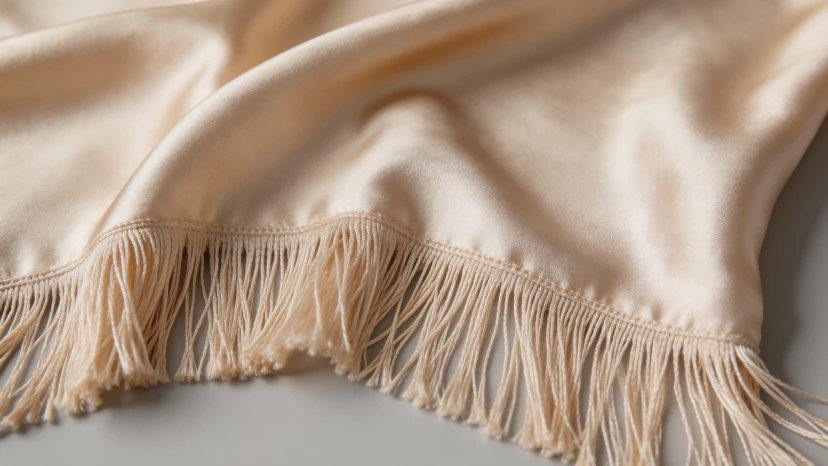
Choosing the Right Silk Scarf Size and Shape for Your Style and Purpose
Silk scarves come in a variety of sizes and shapes, and each format lends itself to different styling methods and occasions. Choosing the right dimensions is just as important as choosing the right fabric — a scarf that is too small for your intended style will look awkward, and one that is too large may feel cumbersome.
- Small square (50cm – 55cm): Best for wrist wraps, ponytail accents, small bag bows, and pocket squares. Too small for most neck tying styles.
- Classic square (65cm – 70cm): The most versatile everyday size. Works for French knots, bandana drapes, headbands, hair ties, bag accessories, and casual neck styling.
- Large square / Carré (85cm – 90cm): The traditional luxury scarf format. Ideal for Italian twists, cravat ties, vintage headscarves, shoulder drapes, and statement styling. This is the most popular size for high-end silk scarves.
- Grande / Shawl (130cm – 140cm): A large-format silk scarf that doubles as a shawl, wrap, or light layering piece. Perfect for evening events, travel, and dramatic draping styles.
- Twilly / Skinny (5cm × 86cm): A narrow, elongated format designed specifically for bag handle wraps, ponytail ties, and wrist accessories.
- Oblong / Stole (various): Rectangular scarves that are longer than they are wide. Excellent for flowing neck drapes, infinity loops, and relaxed shoulder wraps.
If you are buying your first luxury silk scarf and want maximum versatility, the 90cm × 90cm square is the classic choice. It provides enough fabric for virtually every popular tying and styling method — from casual neck knots to dramatic headscarves — while being compact enough to fold neatly into a bag or pocket when not in use. For a deeper dive into tying methods for each size, see our guide on how to tie a silk scarf.
How to Verify the Authenticity and Quality of a Real Silk Scarf
The market for silk scarves includes a significant amount of synthetic imitations labeled as "silk" or "silky." If you are paying a premium for real silk, you want to be certain that you are getting what you paid for. Here are reliable ways to assess whether a silk scarf is genuine and high quality — both before and after purchase.
The Touch Test
Real silk has a distinctively smooth, cool-to-the-touch feel that warms gently with contact. When you rub the fabric between your fingers, high-quality silk feels soft but not slippery in a plastic way — there is a slight, natural "catch" or resistance. Polyester satin, by contrast, feels uniformly slippery and slightly warm or static-prone. Genuine silk also has a natural drape and weight that synthetic fabrics cannot perfectly replicate.
The Luster Test
Hold the scarf up to a light source and tilt it at different angles. Real silk produces a natural, shifting luster — the color appears to change subtly as the angle of light changes, with a warm, dimensional quality. Synthetic "silk" tends to have a flat, uniform shine that looks the same from every angle, with an almost plastic-like brightness.
The Weight Test
A quality silk scarf should have a satisfying, appropriate weight for its size. If a 90cm × 90cm scarf feels weightless — like holding air — it is likely made from extremely low-momme silk, synthetic material, or a blend. A well-made silk twill scarf in this size should have a pleasant, noticeable heft when held in your hand.
The Burn Test (Destructive)
If you can sacrifice a small thread from an inconspicuous area, the burn test is definitive. Real silk burns slowly, smells like burning hair (because it is a protein fiber, like hair), self-extinguishes when the flame is removed, and leaves a dark, powdery ash that crumbles easily. Polyester melts, smells like burning plastic, continues burning after the flame is removed, and leaves a hard, shiny bead. This test destroys the sample, so only use it when necessary.
The Wrinkle Test
Scrunch a small section of the fabric in your fist for ten seconds, then release. Quality silk wrinkles will relax and fall out within seconds to minutes, thanks to the fiber's natural elasticity. Poor-quality silk or synthetic material will hold deep creases that take much longer to release — or remain permanently creased.
Check the Certifications
Reputable silk products carry third-party certifications that verify material quality and safety. OEKO-TEX® Standard 100 certification means the fabric has been independently tested for over 1,000 harmful substances and is safe for direct, prolonged skin contact. This is particularly important for silk products that sit against your face and neck. All DreamSilk products carry OEKO-TEX® certification, and we provide documentation to brand clients for their own product labeling.
Considering Long-Term Care When Choosing a Luxury Silk Scarf
A truly luxury silk scarf is an investment, and like any investment, its long-term value depends on maintenance. Before purchasing, consider how much care the scarf will require and whether that fits your lifestyle.
Higher momme silk (16mm and above) is generally more durable and forgiving in everyday use than very lightweight silk. Silk twill is more resistant to wrinkles and snags than charmeuse or chiffon. Colorfast, reactive-dyed prints hold up better through repeated washing than surface-printed designs. Hand-rolled hems are more durable than raw-cut edges. All of these factors affect how long your silk scarf will look and feel luxurious.
When you buy a silk scarf, make sure you understand the care requirements: hand washing in cool water with a pH-neutral detergent, flat drying away from direct sunlight, low-temperature ironing or steaming, and proper storage in a breathable fabric bag or wrapped in acid-free tissue paper. For a complete care walkthrough, see our guide on how to wash a silk scarf.
If you are choosing a silk scarf as a gift, consider including a brief care card. This small gesture communicates quality, thoughtfulness, and ensures the recipient knows how to maintain their new silk accessory properly — which protects your gift's longevity and leaves a lasting positive impression.
Where to Source Luxury Silk Scarves: Retail, Online, and Direct from Manufacturer
Where you buy your silk scarf matters as much as what you buy. Each sourcing channel has different advantages depending on whether you are buying for personal use, gifting, or building a brand.
Luxury Retail Boutiques
High-end department stores and designer boutiques offer curated selections of silk scarves from established fashion houses. The advantage is the ability to touch, feel, and try on the scarf before buying. The disadvantage is a significant price premium — retail markups on luxury silk accessories can be 5x to 10x the manufacturing cost. If you value the brand name and the in-store experience, retail is the right channel for you.
Online Direct-to-Consumer Brands
A growing number of quality silk brands sell directly online, cutting out the retail middleman and offering better value. When buying online, look for detailed product descriptions that specify the silk type (mulberry), grade (6A or 5A), momme weight, weave type, dimensions, and certifications. Customer reviews, close-up product photos, and transparent return policies are also good indicators of a trustworthy seller.
Direct from Manufacturer (OEM/ODM)
If you are a brand owner, retailer, e-commerce seller, or gift company, sourcing silk scarves directly from a manufacturer gives you the best pricing, full customization control, and the ability to create products under your own brand identity. Working directly with a silk manufacturer like DreamSilk means you can specify every detail — fiber grade, momme weight, weave type, print design, Pantone colors, scarf dimensions, edge finishing, label placement, and packaging format — and receive a product built to your exact specifications at factory-direct pricing.
This direct sourcing model is how many successful silk scarf brands operate. They design the product and the brand experience, while the manufacturer handles the material sourcing, production, quality control, and fulfillment. It eliminates layers of cost while maintaining full quality control through the sampling and approval process.
Red Flags to Watch For When Buying a Silk Scarf
Knowing what to avoid is just as important as knowing what to look for. Here are the warning signs that a silk scarf may not be the quality it claims:
- "Silk" without specifying fiber content: A legitimate luxury silk scarf should clearly state "100% silk" or "100% mulberry silk." Vague terms like "silk feel," "silky," "silk-style," or "satin" often indicate synthetic fabric.
- No momme weight listed: Quality sellers are transparent about momme weight. If this information is missing, the fabric is likely very lightweight (under 12mm) or not pure silk.
- Unusually low price: Genuine mulberry silk is not cheap to produce. If a "100% silk" scarf is priced far below comparable products — especially if it is a large format like 90cm × 90cm — question the material. Real silk at 14+ momme has a floor cost that legitimate sellers cannot undercut without sacrificing quality.
- Raw-cut or glued edges: Luxury silk scarves always have finished hems — hand-rolled, machine-rolled, or self-fringed. Unfinished, raw, or heat-sealed edges indicate low-cost production.
- Colors that look flat or plastic-like: High-quality silk has a warm, dimensional sheen. If the scarf has a flat, uniform, almost metallic shine, it may be polyester satin rather than real silk.
- No care instructions: A quality silk product always comes with care instructions. The absence of a care label or washing guidelines suggests that the seller either does not understand or does not care about the product's long-term performance.
- No certifications mentioned: Reputable silk manufacturers provide OEKO-TEX® or equivalent certifications to verify material safety. The absence of any third-party certification is worth noting — especially for products marketed as "luxury" or "premium."
Create Your Own Luxury Silk Scarf Line with DreamSilk
If this guide has inspired you to launch your own silk scarf brand — or to add silk scarves to your existing product line — DreamSilk is ready to bring your vision to life. As a professional silk product manufacturer based in Suzhou, China, we have been producing custom silk scarves, silk shawls, silk wraps, and silk accessories for brands across 50+ countries.
Our full customization capabilities include:
- Fiber: 6A-grade 100% mulberry silk, OEKO-TEX® certified
- Momme weight: 8 / 12 / 14 / 16 / 19 / 22 / 25 / 30 mm — matched to your product positioning
- Weave: Twill, charmeuse, chiffon, habotai, crepe de chine — selected based on your design concept
- Printing: Digital printing and screen printing with Pantone color matching
- Size: Any standard or custom dimension
- Edge finishing: Hand-rolled hems, machine-rolled hems, fringed edges
- Branding: Custom woven labels, printed labels, embroidered logos, hang tags
- Packaging: Gift boxes, silk pouches, branded packaging, or custom solutions
MOQ starts at just 50 pieces. We support both OEM (your complete design, we produce) and ODM (we help develop the product from your concept). Our team guides you through fabric selection, pattern design, sampling, production, and delivery with clear timelines and consistent quality.
Ready to get started? Contact us today for a free quote, or send your design files and project brief directly to info@dreamsilken.com. Let's create silk scarves that your customers will treasure.
FAQ
For a versatile, everyday luxury silk scarf, 14 to 19 momme silk twill is the ideal range. It provides the perfect balance of weight, drape, color depth, and durability. Lighter momme (8 to 12mm) works for sheer chiffon styles and summer scarves, while heavier momme (19 to 25mm) is better for large shawls and wraps. If you are unsure, a 16 momme silk twill scarf is an excellent all-around starting point.
Grade 6A silk is the highest classification in the raw silk grading system. It indicates fibers that are the longest, finest, and most uniform — resulting in a fabric that is exceptionally smooth, lustrous, and durable. Lower grades (3A, 2A, A, B, C) use shorter, more irregular fibers that produce a rougher texture, less consistent color absorption, and a shorter lifespan. For a luxury silk scarf, 6A or 5A grade silk is the recommended standard.
Real silk feels smooth and naturally cool to the touch, warms gently with contact, and has a shifting, dimensional luster that changes with the angle of light. Polyester satin feels uniformly slippery and has a flat, plastic-like shine. The burn test is the most definitive method: real silk smells like burning hair and leaves a powdery ash, while polyester smells like plastic and leaves a hard bead. You can also check the wrinkle recovery — quality silk relaxes wrinkles quickly, while synthetic material holds creases longer.
It depends on the style you prefer. Silk twill has a subtle diagonal texture, a semi-matte sheen, and holds knots and folds reliably — making it the most versatile and practical choice for tying and styling. Silk charmeuse has a high-gloss, liquid-like surface that looks stunning when draped but is more slippery and harder to knot securely. For everyday versatility, twill is generally the better choice. For formal events or draped styles where maximum sheen is desired, charmeuse is beautiful.
The 90cm × 90cm square silk scarf is the most recommended size for a first purchase. It is large enough to tie in virtually every popular style — French knot, Italian twist, bandana drape, headscarf, shoulder wrap — while being compact enough to fold and carry easily. This is the classic format used by luxury fashion houses and the size that offers the most styling flexibility.
A well-made silk scarf using 6A-grade mulberry silk at 14+ momme weight can last for decades with proper care. Silk is a remarkably durable natural fiber when protected from harsh chemicals, direct sunlight, and mechanical abrasion. Many vintage luxury silk scarves from the mid-20th century are still in wearable condition today — a testament to the fiber's longevity when handled correctly.
<
< < >< >< >< >< >< >< >< >< >< >