What Is a Weighted Eye Mask? Benefits, Materials, and How It Works


What Is a Weighted Eye Mask?
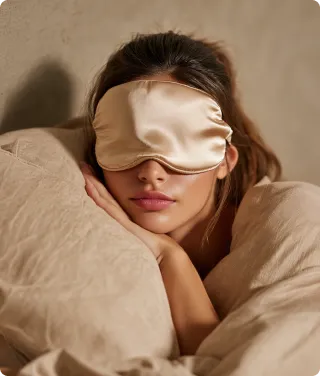
A weighted eye mask is a sleep mask filled with materials like glass microbeads, flaxseed, or clay pellets. It covers the eyes and applies gentle, evenly distributed pressure across the brow, temples, and upper cheek area.
The basic idea is simple: block all light and add a small amount of weight to the eye area. That combination — total darkness plus mild pressure — creates conditions that help many people relax and fall asleep more easily.
Most weighted eye masks weigh between 100g and 450g. The filling is usually stitched into separate compartments so the weight stays evenly spread rather than shifting to one side. Some designs include an adjustable strap; others rely on the weight itself to hold the mask in place.
We manufacture weighted eye masks for brands across 50+ countries, and the demand for this product category has grown steadily over the past few years — particularly among sleep product brands, wellness companies, and e-commerce sellers targeting the self-care market.
How Does a Weighted Eye Mask Work?
A weighted eye mask works through two mechanisms at the same time: complete light blocking and deep pressure stimulation. Both contribute to better sleep conditions, but they work through different pathways.
Light Blocking and Melatonin Production
Artificial light at night suppresses melatonin — the hormone that tells your body it's time to sleep. Even small amounts of light through curtains, a hallway door, or a phone screen can delay melatonin release and disrupt your circadian rhythm.
Any eye mask can block light. But here's where weight makes a practical difference: a weighted mask conforms more closely to the face. The added mass keeps the mask pressed gently against the nose bridge and cheek contours, which reduces the light gaps that commonly appear with lightweight masks — especially for side sleepers who shift position during the night.
The result is more stable, consistent darkness throughout the entire sleep period.
Deep Pressure Stimulation (DTP)
Deep pressure stimulation is the same principle behind weighted blankets. When gentle, even pressure is applied to the body, it activates the parasympathetic nervous system — the "rest and digest" response. This triggers a drop in cortisol (the stress hormone) and supports the release of serotonin and melatonin.
With a weighted eye mask, this pressure is concentrated around the brow ridge, temples, and upper cheekbones — areas with a high density of nerve endings. The pressure also stimulates the vagus nerve, which plays a direct role in calming heart rate and reducing physiological arousal.
The clinically comfortable weight range for the face is roughly 200g to 400g. Below that, the pressure may be too subtle to trigger a noticeable DTP response. Above that, users may feel discomfort or excessive eye pressure.
Filling Materials and Weight Distribution
The filling inside a weighted eye mask determines how the weight feels, how heat is managed, and how the mask can be cleaned. Here's a comparison of the most common options:
| Filling Material | Weight Feel | Heat Retention | Washability | Best For |
|---|---|---|---|---|
| Glass Microbeads | Dense, smooth | Moderate | Good (machine washable inserts) | All-night sleep, general use |
| Flaxseed | Soft, organic | Low (can be cooled or heated) | Not washable (spot clean only) | Relaxation, hot/cold therapy |
| Polyethylene Pellets | Light, flexible | Low | Good | Lightweight designs, travel |
| Clay Pellets (e.g., Terraclay) | Smooth, grounding | Medium (holds temperature) | Not washable | Premium products, eco-friendly positioning |
Regardless of filling type, compartmentalized stitching is important. Without it, the filling shifts freely and can concentrate pressure directly on the eyeballs — which is uncomfortable and potentially risky for long-term use. Divided compartments keep the weight distributed across the surrounding bone structure instead.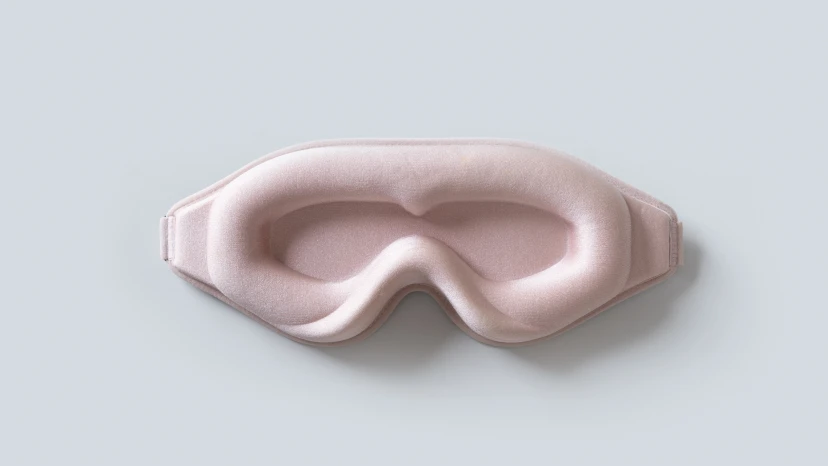
7 Key Benefits of a Weighted Eye Mask
1. Faster Sleep Onset
Many people describe being physically tired but mentally wide awake at bedtime. The combination of visual blackout and steady pressure reduces sensory input on two fronts at once. Your brain has less to process, and the gentle weight provides a consistent physical cue that signals rest.
This works through basic nervous system mechanics: when stimulation drops low enough, the body can shift from alert mode to sleep mode more readily. For people who spend 20-30 minutes lying awake before falling asleep, this reduction in input can meaningfully shorten that window.
2. Deeper, Less Interrupted Sleep
Sleep quality depends on continuity. Brief micro-awakenings — caused by light changes, mask shifting, or environmental disturbance — break up REM and deep sleep cycles even if you don't fully wake up or remember them.
A weighted eye mask stays in place better than a standard mask. The weight keeps it sealed against the face through position changes, which means more stable darkness throughout the night. For side sleepers in particular, this is a real functional advantage — lightweight masks tend to lift at the nose bridge or cheek when you turn over.
3. Anxiety and Stress Relief
The deep pressure from a weighted eye mask stimulates the vagus nerve, which activates the parasympathetic nervous system. This lowers cortisol levels and produces a sensation similar to being held or hugged — sometimes described as a "grounding" effect.
For people dealing with general anxiety, racing thoughts at bedtime, or elevated stress levels, this pressure can reduce the time spent in a heightened state before sleep. It works as a passive, non-drug intervention: you put the mask on, and the pressure does the rest.
This is one of the reasons weighted eye masks have gained traction in the wellness and self-care market — they offer a tangible, physical mechanism for relaxation that users can feel immediately.
4. Migraine and Headache Relief
About 80% of people who experience migraines are sensitive to light. A weighted eye mask provides complete blackout, which removes one of the most common migraine triggers.
Beyond light blocking, the gentle pressure targets acupressure points around the eyes. The areas between the eyebrows (known as Drilling Bamboo or Zan Zhu in traditional Chinese medicine) and the center point between the brows (Yin Tang) are commonly associated with headache and sinus pressure relief. A well-distributed weighted mask applies consistent, low-level pressure to these points.
Pairing the mask with cold therapy — placing it in a freezer for 30-60 minutes before use — can further narrow blood vessels and reduce pain signals. However, if facial pressure tends to worsen your headaches, choose a lighter weight or a design with recessed eye cavities.
5. Eye Fatigue and Screen Recovery
After hours of screen work, the muscles around and behind the eyes build up tension. A weighted eye mask provides a quick reset: complete darkness stops visual processing, and the light pressure helps relax the surrounding muscles.
Even 10-15 minutes of use during a lunch break or afternoon pause can reduce that heavy, strained feeling around the eyes. Many brands now market weighted eye masks specifically for this daytime recovery use case, alongside the traditional sleep application.
6. Better Sleep for Shift Workers and Travelers
Sleeping during daylight hours is biologically difficult. Your circadian rhythm is tuned to keep you awake when it's bright outside, regardless of how tired you are. Shift workers and frequent travelers face this constantly.
A weighted eye mask creates a portable dark environment that doesn't depend on blackout curtains or controlled room conditions. The weight keeps the mask sealed even in awkward positions — on an airplane seat, a hotel bed with thin curtains, or a break room couch. This makes it one of the more practical tools for people who need to sleep outside of normal hours and environments.
7. Skin Protection and Anti-Wrinkle Benefits
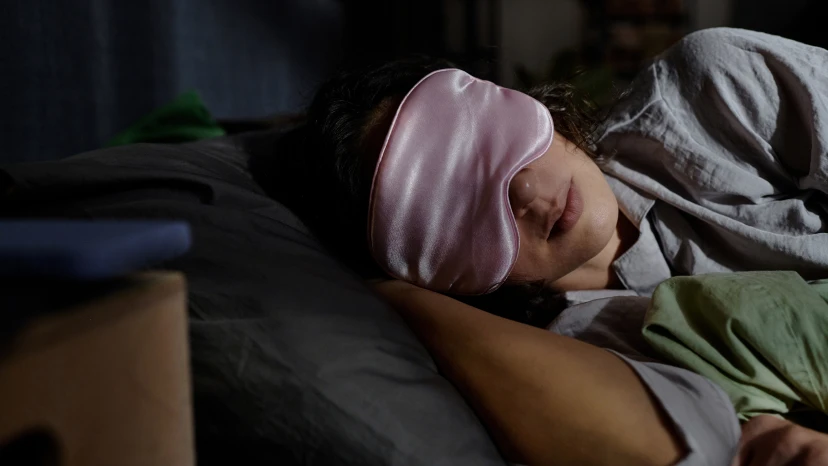
The eye mask creates a physical barrier between your face and the pillow. This reduces friction on the delicate skin around the eyes during sleep, which over time helps prevent sleep creases and fine lines — especially for side and stomach sleepers.
The cover fabric matters a lot here. Cotton and polyester absorb moisture from the skin and can cause friction. Silk, on the other hand, retains the skin's natural oils and moisture, glides smoothly without pulling, and naturally regulates temperature.
For people with sensitive skin conditions like rosacea or eczema, silk is frequently recommended by dermatologists because it doesn't trap heat, doesn't irritate, and its natural protein structure (sericin) reduces allergic reactions. If skin health is a priority for your customers, choosing silk as the cover material adds a genuine functional benefit beyond aesthetics.
Learn more about our silk options for custom silk eye masks.
Are Weighted Eye Masks Good for Sleep?
Short answer: yes, for most people. But it helps to understand what the evidence actually supports and where the limits are.
The light-blocking benefit is well established. Research published in the Journal of Advanced Nursing found that wearing eye masks improved REM sleep in environments with light disturbance. This applies to all eye masks, but weighted designs maintain darkness more reliably through the night because they shift less.
The deep pressure stimulation benefit has strong anecdotal support and aligns with research on weighted blankets and DTP therapy. Studies in the American Journal of Occupational Therapy show that deep pressure can reduce physiological arousal in some individuals. However, clinical trials specifically on weighted eye masks are still limited. Most existing research covers eye masks in general or weighted blankets rather than weighted eye masks as a standalone product.
One practical caution: avoid prolonged direct pressure on the eyeballs. Sustained eye compression could affect tear production and eye lubrication. Masks with compartmentalized stitching or recessed eye cavity designs distribute weight around the orbital bone rather than directly on the eyes — which is the safer choice for all-night wear.
Overall, a weighted eye mask is a sleep environment tool. It creates better conditions for sleep. It does not treat sleep disorders, and anyone with persistent sleep issues should consult a medical professional.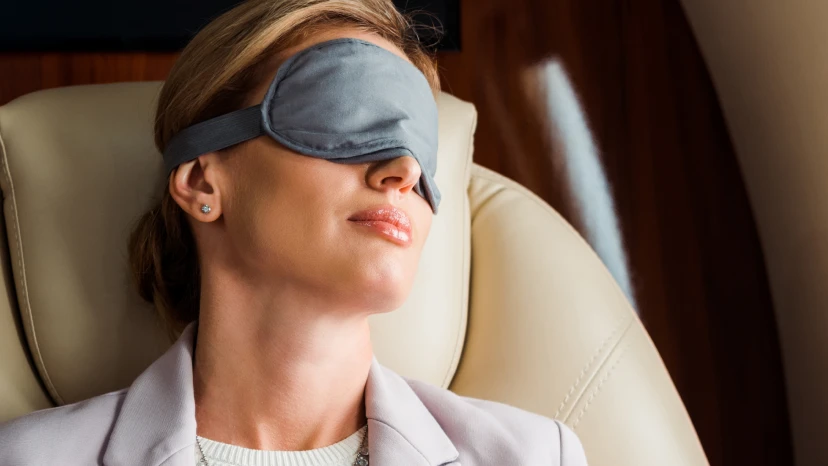
Weighted Eye Mask vs Regular Eye Mask
If you're evaluating whether to offer a weighted version alongside a standard eye mask — or trying to decide which type suits a specific customer segment — here's a side-by-side comparison:
| Weighted Eye Mask | Regular Eye Mask | |
|---|---|---|
| Light Blocking Stability | High — weight keeps mask sealed against the face | Moderate — may shift during sleep, especially for side sleepers |
| Pressure Sensation | Gentle, evenly distributed DTP effect | None |
| Side Sleeper Fit | Better — less likely to lift at nose bridge or cheek | Often lifts or creates light gaps when turning |
| Anxiety / Relaxation | Supports relaxation through DTP | Light blocking only |
| Migraine Use | Blackout + gentle acupressure effect | Blackout only |
| Portability | Slightly bulkier due to filling weight | Compact, folds easily |
| Typical Weight | 100g–450g | 10g–30g |
| Price Range | Mid to high | Low to mid |
Regular eye masks work well for basic light blocking and travel. Weighted eye masks serve a broader range of use cases — sleep improvement, anxiety management, migraine relief, and daytime recovery. For brands, offering both gives customers a clear upgrade path.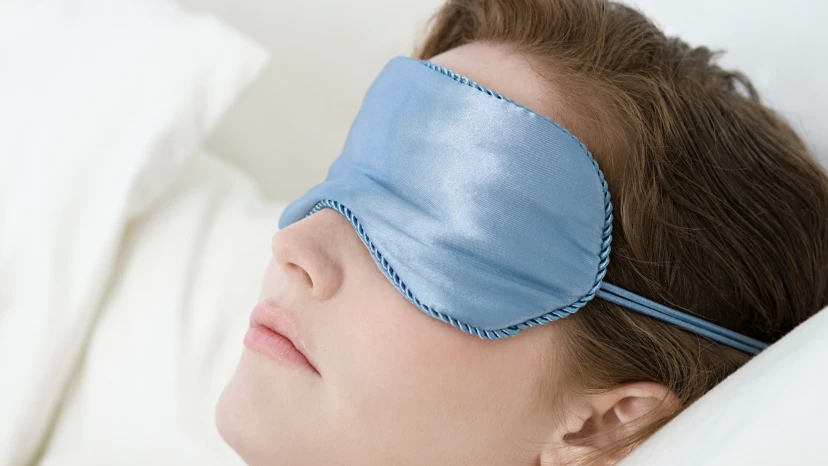
How to Choose a Weighted Eye Mask — From a Manufacturer's Perspective
We've produced weighted eye masks for dozens of brands at different price points and market positions. These are the factors that matter most in product quality and customer satisfaction.
Weight Range
The sweet spot for most users is 200g to 400g. Masks under 150g often feel like a regular eye mask with no noticeable pressure benefit. Masks over 450g can feel heavy on the face and may cause discomfort during extended wear. We recommend offering a weight in the 250g-350g range as a safe default for most adult markets.
Pressure Distribution Design
This is where many cheaper products fall short. Without compartmentalized stitching, the filling shifts freely inside the mask — pooling at the lowest point when the user lies on their side, or pressing directly on the eyeballs when lying on their back.
Proper compartment design divides the mask into 4-8 sections so the filling stays in place. Some higher-end designs also include a recessed or raised eye cavity area that keeps pressure on the brow bone and cheeks while leaving space over the eyes themselves. If your product is meant for all-night use, this design detail is worth the added manufacturing step.
Cover Material
The outer fabric is what touches the customer's skin for 6-8 hours every night. It affects comfort, skin health, and perceived product quality.
- Polyester / microfiber: Low cost, easy to produce, but can trap heat and absorb skin moisture. Suitable for budget products.
- Cotton: Breathable and familiar, but absorbs moisture from the skin and may cause friction over time.
- Bamboo fabric: Soft, breathable, naturally antibacterial. Good mid-range option.
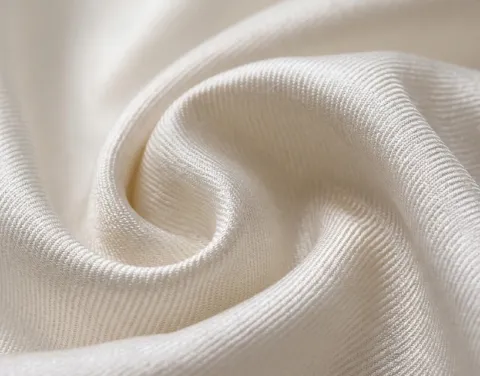
- Mulberry silk: Lowest friction, retains skin moisture, naturally hypoallergenic, regulates temperature. 19-22 momme is the ideal weight for eye masks — light enough to be comfortable, dense enough to be durable. Best choice for premium and sensitive-skin products.
For brands targeting the skincare-conscious market or customers with conditions like rosacea and eczema, silk is a strong differentiator. It's also a natural fit for the gift and luxury wellness segments.
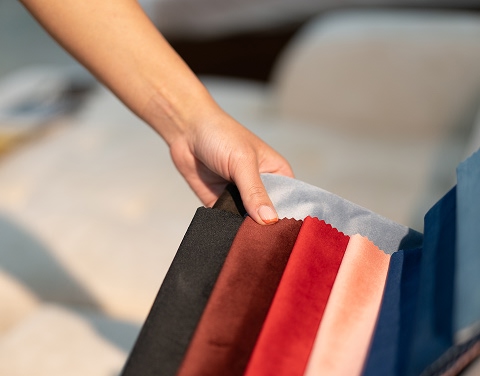
We offer mulberry silk in multiple momme weights and weave types for custom silk eye mask production. If you need material samples before confirming your specification, we can arrange that.
Strap Design and Sleep Position
There are three common approaches:
- Single elastic strap: Simplest design, easy to adjust, works for most head sizes. May not distribute weight evenly on heavier masks.
- Dual strap: Better weight distribution and stability. Stays in place more reliably during sleep. Slightly more complex to adjust.
- Strapless (gravity hold): Relies on the mask's own weight to stay in place. Works for back sleepers and short-term use (naps, meditation, yoga). Not reliable for all-night side sleeping.
For weighted masks specifically, dual-strap designs tend to get better customer reviews because they balance the added weight more evenly across the head.
Care and Washability
An eye mask sits directly on the face. Sweat, skin oils, and makeup residue build up quickly. If the mask can't be cleaned easily, customers stop using it — or leave negative reviews about hygiene.
We recommend a removable, washable cover design as standard. The filling insert stays inside a separate inner shell, and the outer cover zips or snaps off for cleaning. For silk covers, hand washing in cool water with mild detergent (no enzymes, no bleach) and flat drying is the recommended care method.
Who Should Use a Weighted Eye Mask?
Based on our experience working with sleep product brands and the feedback they share from their end users, these are the groups that benefit most:
- People who take a long time to fall asleep, especially those with racing thoughts at bedtime
- Shift workers who need to sleep during daylight hours
- Frequent travelers dealing with jet lag and inconsistent sleep environments
- Migraine and headache sufferers, particularly those with light sensitivity
- People experiencing stress or anxiety that affects sleep quality
- Anyone who works long hours on screens and needs daytime eye recovery
- Side sleepers whose regular eye masks shift or let in light
A weighted eye mask may not be suitable for everyone. People who dislike any pressure on their face, those with claustrophobic tendencies, or individuals with certain eye conditions (such as glaucoma) should consult a doctor before using one. If facial pressure makes your headaches worse rather than better, a standard lightweight mask might be a better fit.
Custom Weighted Eye Masks for Your Brand
At DreamSilk, we manufacture custom weighted eye masks for brands, wholesalers, e-commerce sellers, and gift companies worldwide. Our customization covers the full product specification:
- Filling type and weight (glass microbeads, flaxseed, polyethylene pellets, or custom options)
- Cover fabric selection, including mulberry silk in various momme weights
- Compartment layout and stitching pattern
- Strap type (single, dual, or strapless)
- Custom sizing, color, and print design
- Packaging options from OPP bags to magnetic gift boxes
We support both OEM (your design, we produce) and ODM (we help develop the product from your concept). MOQs, lead times, and pricing depend on your specification — contact us through our custom silk eye mask page to start the conversation.
FAQ
The most comfortable range for most adults is 200g to 400g (roughly 7oz to 14oz). Masks under 150g usually don't produce a noticeable deep pressure effect. Masks over 450g can feel too heavy for extended wear and may cause discomfort around the eyes. If you're choosing for the first time, a mask in the 250g-350g range is a safe starting point.
Yes, most healthy adults can wear a weighted eye mask throughout the night. The key is choosing a design with compartmentalized stitching or a recessed eye cavity so the weight is distributed around the orbital bone — not directly on the eyeballs. Sustained direct pressure on the eyes could affect tear production and lubrication over time. If you notice dry eyes or blurred vision after waking, switch to a mask with better pressure distribution or reduce the wearing time.
A weighted silk eye mask is a weighted eye mask with a mulberry silk outer cover. It combines the deep pressure stimulation benefits of a weighted design with the skin-friendly properties of silk — low friction, natural moisture retention, hypoallergenic, and temperature-regulating. Silk is especially suitable for people with sensitive skin, rosacea, or eczema, as it doesn't trap heat or irritate the skin. The 19-22 momme range is the ideal silk weight for eye masks, balancing softness with durability.
For rosacea-prone skin, a silk eye mask is the most commonly recommended option by dermatologists. Silk doesn't absorb the skin's natural moisture, produces very low friction, and naturally regulates temperature — all of which help avoid triggering rosacea flare-ups. Unlike cotton or synthetic fabrics, silk contains a natural protein called sericin that reduces allergic reactions. Look for 100% mulberry silk with no chemical dyes or harsh treatments. A weighted silk version also provides the added benefit of gentle pressure for relaxation and sleep improvement.
A weighted eye mask can help relieve migraine symptoms through two mechanisms. First, it provides complete blackout, removing light — one of the most common migraine triggers (around 80% of migraine sufferers are light-sensitive). Second, the gentle distributed pressure targets acupressure points around the brow and temples that are associated with headache relief. Placing the mask in a freezer for 30-60 minutes before use adds a cold therapy effect that can further reduce pain. However, if facial pressure tends to make your headaches worse, choose a lighter weight or a contoured design. A weighted eye mask is a comfort tool, not a medical treatment — consult your doctor for persistent migraines.
Most weighted eye masks have a removable outer cover and a separate filling insert. Remove the cover and hand wash it in cool water with mild detergent — avoid bleach and enzyme-based cleaners. For silk covers, lay flat to dry; do not tumble dry or wring. The filling insert should not be submerged in water. Spot clean the insert surface if needed, and air it out regularly. Clean the cover at least once a week, since the mask sits directly on your face and accumulates oils, sweat, and residue.
A weighted eye mask has a strap (single or dual) that holds it securely in place on your head. It's designed for all-night sleep use and stays in position through movement and position changes. A weighted eye pillow has no strap — it sits on your face by gravity alone. Eye pillows are primarily used for short-term relaxation: yoga, meditation, spa treatments, or a quick 15-minute rest. They're not practical for full-night sleep because they slide off when you turn. If your product line targets the sleep market, a strapped eye mask is the right format. For wellness and relaxation use, an eye pillow works well as a complementary product.